Loading edition…
CURRENT EDITION
Mechanical Keyboard
OUR PICKS
Our first choice is ZSA Voyager ($365). Steel-backed split halves, column stagger and magnetic tenting cut wrist strain more than any board here. Oryx-tuned QMK and hot-swap Choc sockets justify $365 only for buyers who need real ergonomic correction. AULA F75 Max ($80) is the budget pick.
EDITION 01RESEARCHED 2026-07-1324 SOURCESREFRESH DUE 2027-01
8 PRODUCTS · RANKED
House priorities favor construction, performance, and value.
Current top recommendation: ZSA Voyager.
| Criterion · priority | 01 ZSAZSA Voyager$365 | 02 NuPhyNuPhy Air75 V3$140 | 03 NuPhyNuPhy Halo75 V2$130 | 04 LemokeyLemokey P1 Pro$129 | 05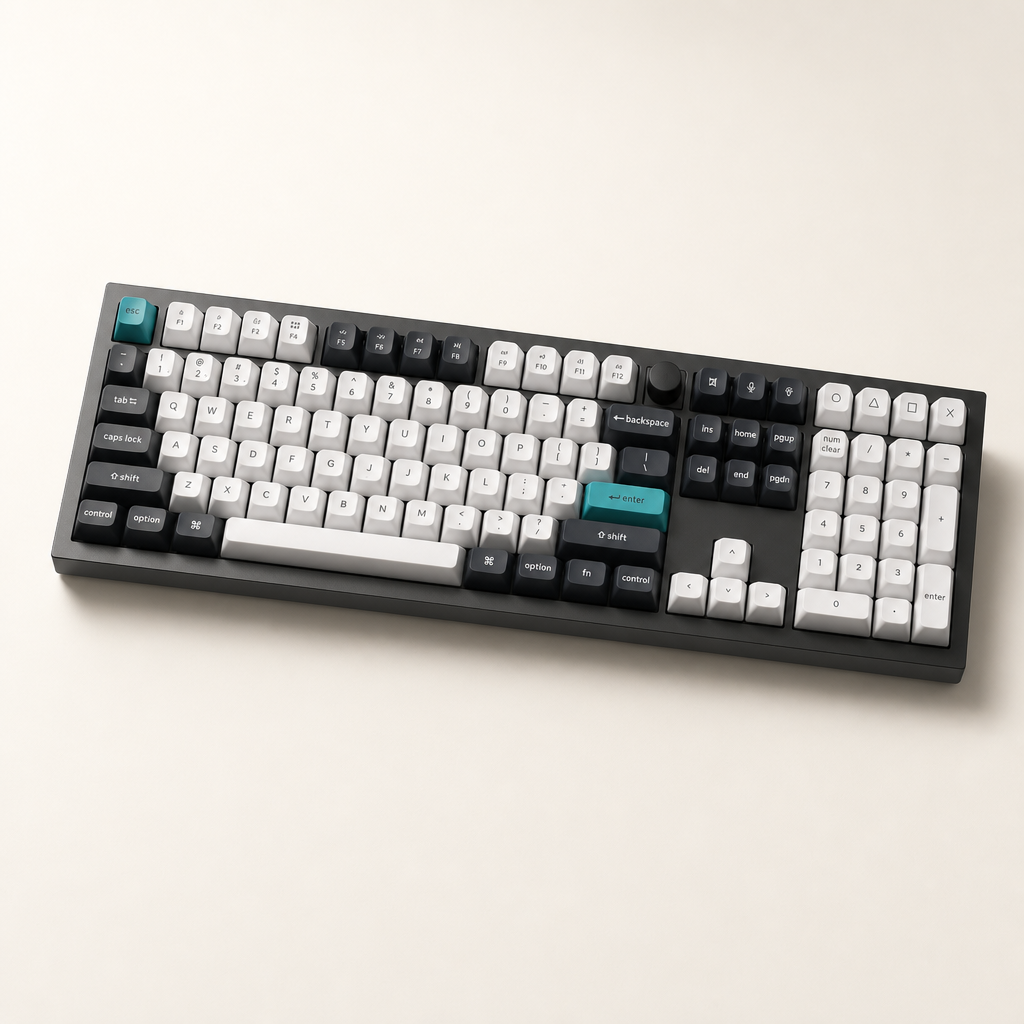 KeychronKeychron Q6 Max$220 | 06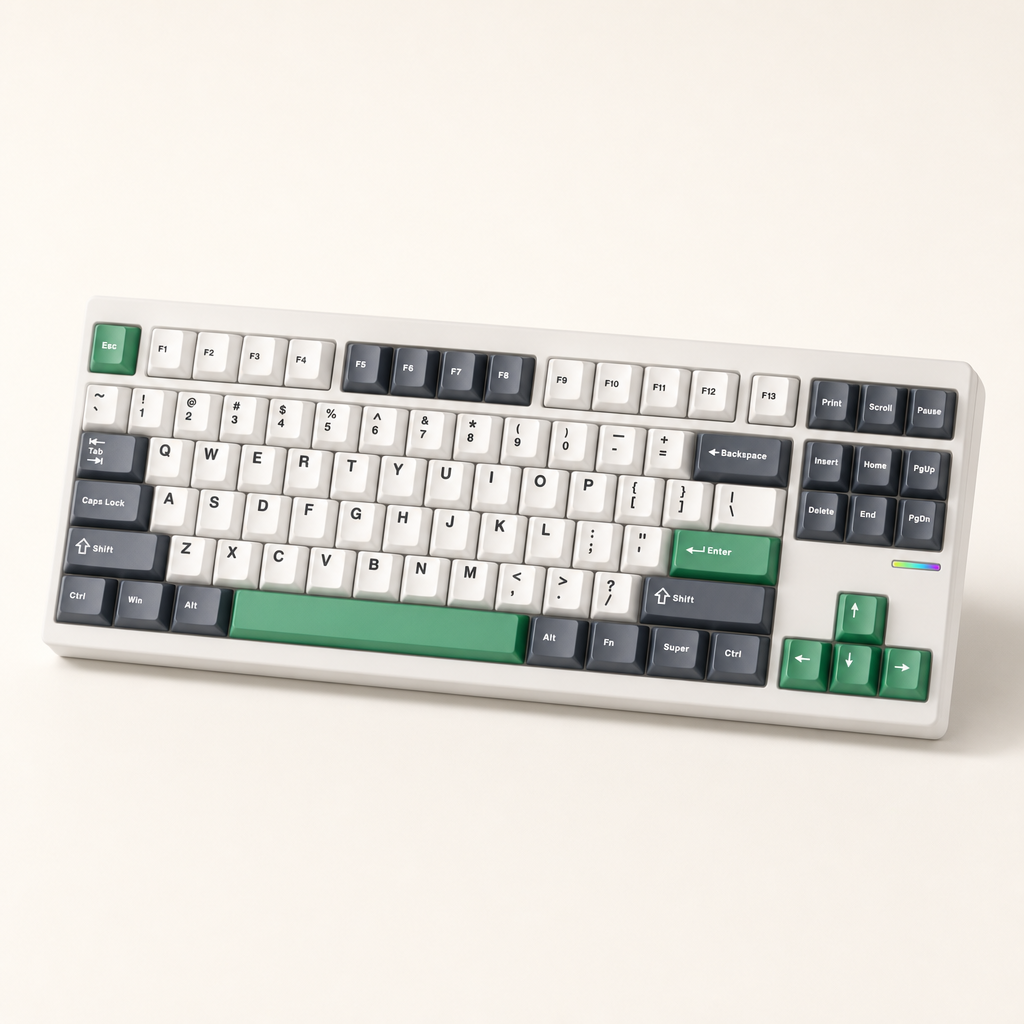 MCHOSEMCHOSE GX87 Ultra$109 | 07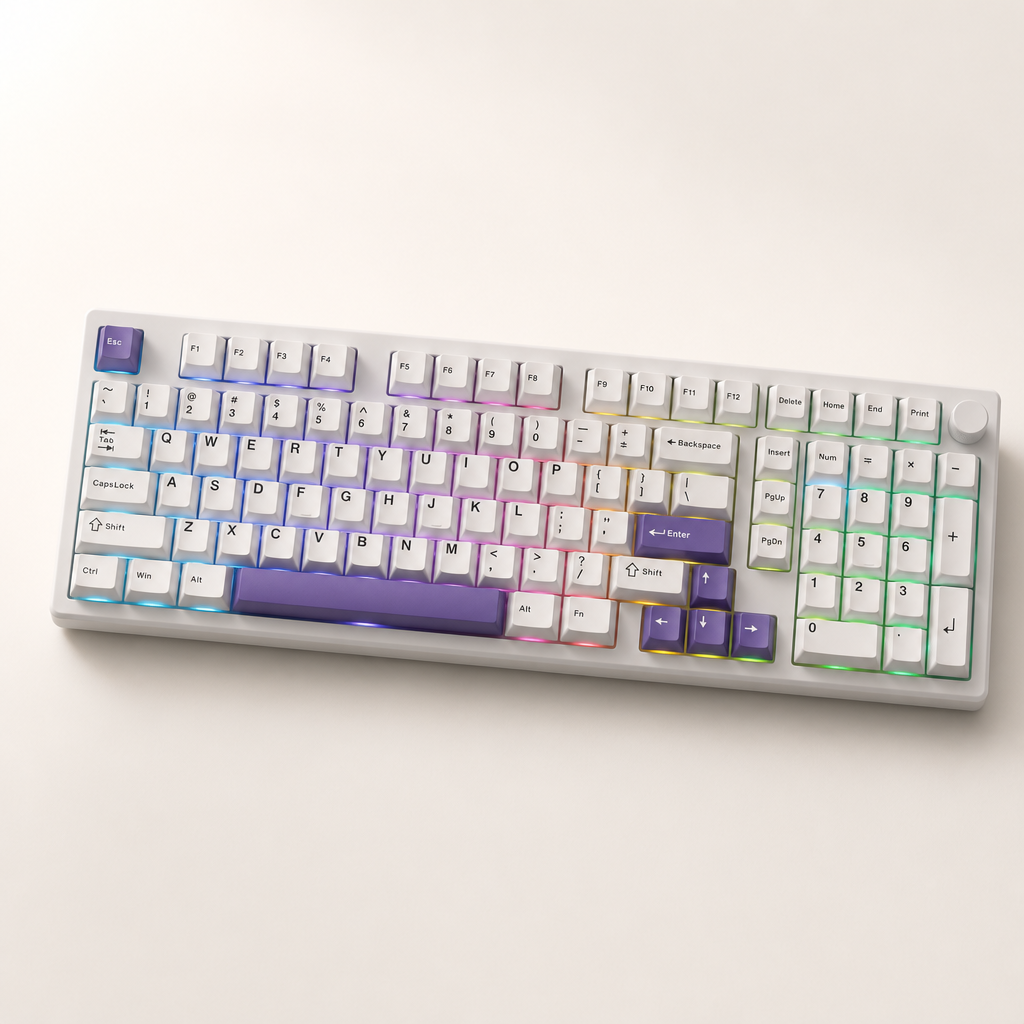 EpomakerEpomaker Galaxy100$100 | 08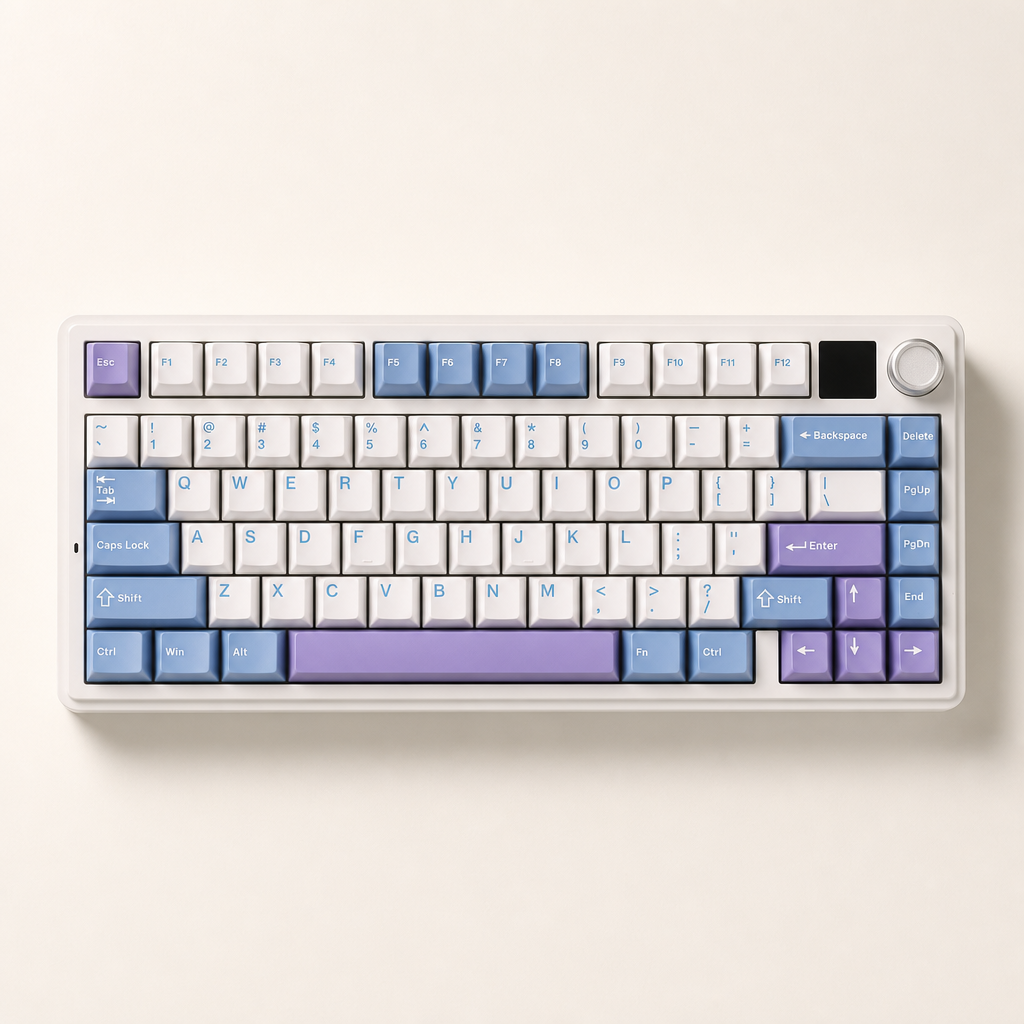 AULAAULA F75 Max$80 |
|---|---|---|---|---|---|---|---|---|
| Typing FeelPriority 1 | 8.2Dense steel-backed halves feel stable and precise; Choc V1 travel is crisp but clackier than premium MX. | 8.5Gasket mounting adds welcome cushioning and acoustic control within low-profile travel limits. | 9.1POM plate, gasket isolation and extensive damping produce a smooth, consistent stock feel. | 9.0Reviewers describe a soft landing and bouncy, energetic gasket feel. | 9.0PC plate, double gaskets, foams and Jupiter switches provide cushioned, controlled bottom-out. | 8.8Silicone gasket mount and flex-cut assembly provide a smooth, lively but controlled response. | 8.9Flex-cut PP plate and gasket mount produce a soft, satisfying marbly response. | 8.8Gasket isolation and five-layer damping produce a soft, consistent bottom-out; pre-lubed linears avoid scratchiness. |
| Stabilizer TuningPriority 2 | 8.8Small thumb keys avoid most conventional long stabilized keys and their associated rattle. | 8.0Factory-lubed low-profile stabilizers show little rattle in independent testing. | 9.1Well-tuned modifiers plus the silicone GhostBar suppress spacebar resonance. | 8.2Stock large keys are consistently well controlled, though not individually hand-tuned. | 8.8Independent review specifically praises the PCB screw-in stabilizers. | 7.4Factory-lubed plate-mount units are good, but less inherently serviceable than screw-ins. | 7.9Generally good stock modifiers, with occasional spacebar rattle reported. | 8.2Independent reviews report smooth, quiet large keys with little stock rattle. |
| Case & MountPriority 3 | 9.2Independent reviewers emphasize the dense, solid steel-backed construction. | 8.4Rigid anodized top and gasket mount; plastic base is a rational weight-saving compromise. | 8.3Excellent hybrid construction and damping, though less rigid than full CNC aluminum. | 9.2Full 6063 CNC shell and gasket isolation provide excellent rigidity without harshness. | 9.52.18kg CNC aluminum shell, double gasket and force isolation suppress flex and resonance. | 9.3Dense 6063 CNC chassis and multilayer damping; reviewers call the construction tank-like. | 9.2Heavy full-aluminum enclosure is rigid and well damped. | 7.8Effective gasket mount and damping, but the ABS enclosure cannot match a machined chassis for rigidity. |
| Switches & KeycapsPriority 4 | 8.2Hot-swap Kailh Choc options and durable PBT caps; ecosystem is narrower than MX. | 8.8Gateron low-profile 3.0 switches and double-shot PBT caps are durable and consistent. | 9.0Strong factory-lubed switch choices and thick double-shot PBT mSA caps. | 8.8Smooth hot-swap stock switches and thick double-shot PBT caps. | 8.8Pre-lubed Gateron Jupiter switches and oil-resistant double-shot PBT caps. | 8.2Pre-lubed KTT options and double-shot PBT caps are solid stock components. | 8.4Smooth pre-lubed options and thick double-shot PBT caps. | 8.1Smooth Leobog switch options and PBT caps are exceptional at this price. |
| Firmware & ConnectivityPriority 5 | 9.6Oryx is an unusually approachable front end to powerful QMK; wired operation is dependable. | 9.1QMK/VIA, 2.4GHz, Bluetooth and wired modes with a 4,000mAh battery. | 9.1QMK/VIA, Bluetooth, wired and 1000Hz 2.4GHz cover both work and gaming. | 9.2QMK/VIA plus reliable wired, Bluetooth and 1000Hz 2.4GHz modes. | 9.4QMK/VIA, NKRO, 1000Hz wired/2.4GHz and three-device Bluetooth. | 8.6QMK/VIA and tri-mode wireless; isolated reports of radio quirks prevent a top score. | 7.8Tri-mode and QMK/VIA are excellent on paper; wireless VIA behavior has minor reported bugs. | 7.1Wired, 2.4GHz and Bluetooth are useful; proprietary software is the compromise versus VIA. |
| Layout & ErgonomicsPriority 6 | 9.7Split, column stagger, thumb keys and magnetic tenting strongly reduce awkward reach and wrist deviation. | 9.4Slim front height, portable 75% width and modular knob reduce wrist extension and desk reach. | 8.8Efficient 75%, useful feet and sensible controls; unusual cap profile may divide users. | 8.1Practical 75% plus knob; fixed height and weight reduce portability. | 7.8Complete standard layout, but tall fixed angle and large footprint demand space and support. | 8.4Standard TKL needs no relearning; fixed angle and high mass limit flexibility. | 8.2Numpad in a narrower footprint; fixed angle and compressed navigation cluster require adaptation. | 8.3Familiar 75% arrangement, knob and compact mouse-friendly width. |
| Repairability & ModularityPriority 7 | 9.0Hot-swap switches, accessible screws, replaceable cables and excellent documentation/support. | 8.2Hot-swap and accessible screws; low-profile switch and cap choices remain narrower than MX. | 8.05-pin hot-swap is excellent; the layered hybrid enclosure is less inviting than tool-free customs. | 9.05-pin hot-swap, standard MX parts, exposed fasteners and open firmware. | 9.05-pin MX hot-swap, screw-in stabs, standard parts and documented source code. | 9.4Tool-free case access, hot-swap sockets and standard TKL parts are exemplary. | 8.85-pin hot-swap, standard MX parts and conventional screws. | 7.83/5-pin hot-swap extends life, although the clipped plastic case is less pleasant to reopen. |
| Weighted value | 9.1/ 10 | 8.6/ 10 | 8.6/ 10 | 8.2/ 10 | 8.1/ 10 | 8.0/ 10 | 7.5/ 10 | 7.4/ 10 |